
Archer Aviation lands Korean Air as exclusive partner; “up to 100” eVTOLs on the table
TUG Team
10/20/20252 min read

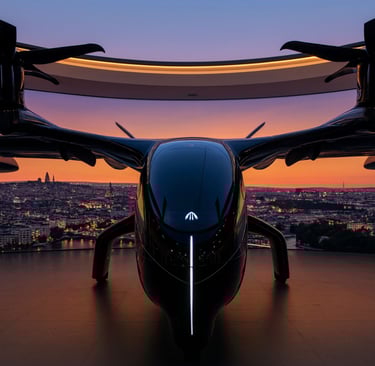
Archer Aviation said Monday it has been selected by Korean Air as the flag-carrier’s exclusive eVTOL partner for South Korea and signed an agreement to jointly commercialize the Midnight aircraft “across multiple applications and use cases, starting with government applications.” The framework includes a plan for Korean Air to purchase up to 100 Midnight units. Archer reiterated the aircraft’s baseline spec—piloted, four passengers, designed to swap 60–90 minute car trips for 10–20 minute hops—and noted recent flight-test milestones, including climbs to roughly 10,000 ft and a point-to-point run of about 55 miles in ~31 minutes during trials. 
This isn’t another hand-wavy letter of intent from a tourism operator. A national flag carrier is effectively a systems integrator: it plugs aircraft into airport slots, training pipelines, maintenance regimes, and government procurement. That’s the bundle urban air mobility actually needs—routes, vertiports, regulators—not just pretty renders. For Archer, a triple-digit purchase potential shores up the order book narrative investors care about while pushing unit costs down the only way aerospace knows how: volume. The market noticed; headlines tied the news to an intraday ACHR bump as traders priced in a clearer commercialization path. 
South Korea’s transport ministry has already named UAM a national priority, which is why big carriers there often move first and bring regulators and infrastructure with them. Archer enters this with heavyweight backers (think Stellantis, prior airline relationships like United) and fresh IP muscle after buying ~300 Lilium patents for €18M ($21M), taking its portfolio to 1,000+ assets last week. The flip side: Archer is still pre-profit and guided a Q3 adjusted EBITDA loss of $110–$130M as it builds out production (the company has talked about six aircraft coming off two U.S. sites in the near term). Today’s deal doesn’t repeal certification physics: type certification, pilot training, battery lifecycle economics, noise contours, and vertiport readiness will pace deployment. The announcement itself also uses “up to 100” language—industry-standard, but still contingent on milestones and approvals.
As commercialization bridges from slides to schedules, who buys and operates matters more than who prototypes. A flag-carrier partnership + up-to-100 aircraft plan gives Archer a credible launch market and a template others can copy: start with government-backed missions, de-risk operations, then expand to civilian corridors. If the certification and infrastructure pieces land on time, Seoul could become eVTOL’s most convincing real-world case study—less hype, more timetables.